Cargando...

 BetaBeta
En la lección pasada armaste el material de entrega, convertiste la fecha límite, firmaste la lista de descalificadores y apretaste enviar. Deja el material abierto. Esta lección lo lee desde el otro lado de la fecha límite.
A veces el pitch es peor que el producto, y pierdes. Se lo he visto pasar a buenos equipos: el producto hacía lo que tenía que hacer, los tres minutos de video no lo vendieron, y el único feedback fue una página de ganadores un mes después sin tu nombre. Ese mes entre la fecha límite y esa página es el tramo que la mayoría de los equipos pasa refrescándola, y el archivo de esta lección está escrito para ese tramo. Planear la próxima temporada antes de que lleguen los resultados puede sentirse como darse por vencido. Es lo contrario, porque el anuncio tarda un mes y la próxima ventana abre antes.
Empieza el archivo ahora. Crea next-season-plan.md junto al material de entrega, abre colosseum.com/hackathon, busca la parte que dice qué pasa cuando cierran los envíos, y copia las dos oraciones que importan con la fecha en que las leíste. Leído el 2026-09-06, el archivo empieza así:
next-season-plan.md, Fiado, abierto 2026-09-06
después de enviar:  'an even smaller group of teams is invited to a 15-minute Zoom interview' (un grupo aún más pequeño de equipos es invitado a una entrevista de 15 minutos por Zoom)
anuncio:            ganadores y el subconjunto que va a la aceleradora, más o menos un mes después de la fecha límite
(colosseum.com/hackathon, 2026-09-06)
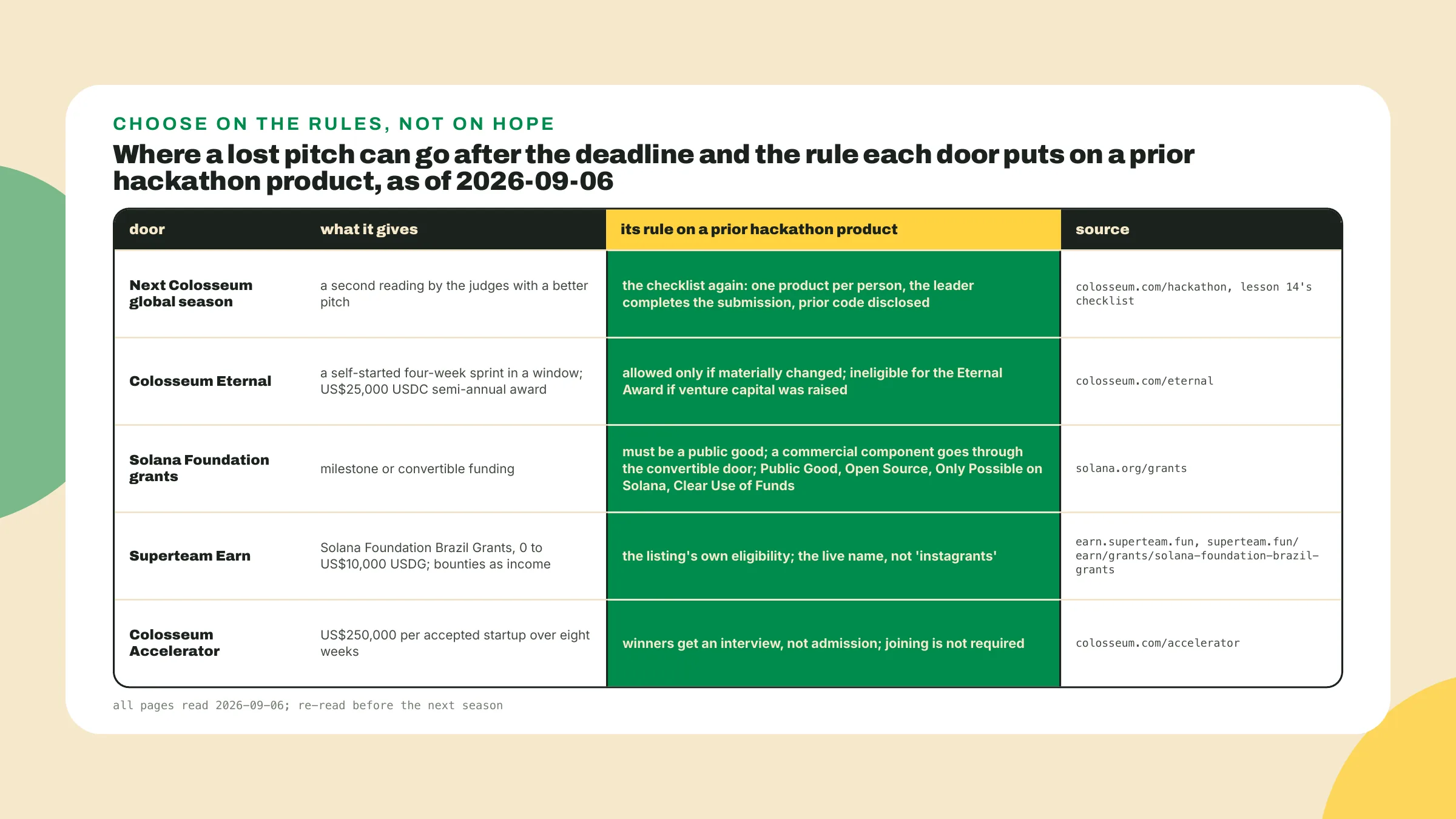
Escribe el mapa del después debajo de esas dos líneas. Desde la temporada World's Fair 2026, un proyecto enviado tiene cinco lugares adonde ir: la entrevista, la aceleradora, los grants de la Foundation, Superteam Earn y Eternal entre temporadas. La entrevista viene después de las rondas internas y de la lista corta de la lección 2, y es la primera lectura de tu material contigo en la sala. Después el anuncio nombra a los ganadores y al subconjunto que pasa a la aceleradora. Dale a la aceleradora su propia línea, porque a los ganadores del hackathon se les garantiza una entrevista para la Accelerator, no la admisión, los ganadores no están obligados a entrar, y la Accelerator invierte US$250,000 por startup aceptada a lo largo de ocho semanas (colosseum.com/accelerator, 2026-09-06).
Prepara los quince minutos. Nadie publica las preguntas de la entrevista, así que la preparación sale de los siete factores que copiaste en la lección 2. Quince minutos son tres preguntas, quizá, y las tres que una respuesta escrita no puede resolver son por qué este equipo y por qué le importa (Founder + Market Fit, ajuste entre fundadores y mercado), cómo encontraste la oportunidad (Insight, la idea clave) y cómo prioriza el equipo (Product + Execution, producto y ejecución, donde la revisión del repo ya pedía funcionalidades priorizadas con estrategia). Yo lo matizaría a las tres más probables, no a las tres seguras, porque los siete factores son lo único publicado.
Escribe tres notas, cada una apuntando a un archivo que ya está en tu repositorio del toolkit, y después escribe quién toma la llamada: el storyteller de la tarjeta del equipo y el builder, porque la pregunta de priorización se le hace a la persona que hizo los cortes. Dentro de un mes todos van a dar por hecho que otro está en la llamada. Las notas de Fiado:
prep de entrevista:  founder y market fit: la dueña de la tienda detrás de la caja, con nombre
                     cómo se encontró la oportunidad: cinco conversaciones, semana 1, paquete de evidencias
                     cómo prioriza el equipo: no-objetivos de la tarjeta de alcance, el corte de la semana 3 y su razón
                     en la llamada: storyteller y builder
Elige un camino de financiamiento y cita su página. La puerta es milestone, convertible, tu grant regional en Earn, o la entrevista de la aceleradora si quedas. La Solana Foundation, según solana.org/grants el 2026-09-06, nombra dos formas y una tercera puerta. Los grants por milestone son para bienes públicos, y se pagan contra hitos. Los grants convertibles son para bienes públicos con un componente comercial, un grant que más adelante puede convertirse en inversión. Los RFP son la Foundation pidiendo algo específico.
Las guías son Public Good, Open Source, Only Possible on Solana y Clear Use of Funds (bien público, código abierto, solo posible en Solana, uso claro de los fondos), y las dos primeras deciden tu puerta: un producto con una respuesta de Viability (viabilidad) no es un bien público en el sentido de milestone, y la página manda esa forma a los grants convertibles. La revisión toma cerca de una semana y la decisión cerca de tres semanas, así que una solicitud presentada la semana después de la fecha límite se responde más o menos cuando llega el anuncio.
La puerta regional es Solana Foundation Brazil Grants, que corre Superteam Brasil en Superteam Earn, de 0 a US$10,000 USDG, en superteam.fun/earn/grants/solana-foundation-brazil-grants. La etiqueta vieja instagrants ya no vale, así que el plan lleva el nombre vigente y el enlace. La línea de Fiado dice convertible, porque el fiado es comercial, y los módulos open source del fiado y del recordatorio son la parte de bien público.
Escribe la línea de Earn y el riel hasta tu banco. El 2026-09-06 la API de Earn devolvió 46 grants, y el otro con Brazil en el nombre, 'The Touching Grass Fund (Brazil)', de 0 a US$500, tiene el tamaño de un pasaje de bus a una final, así que va bajo logística. Earn también es de donde sale el ingreso mientras el producto encuentra sus primeras diez tiendas, así que la línea de Fiado agrega un bounty por semana para el builder entre temporadas.
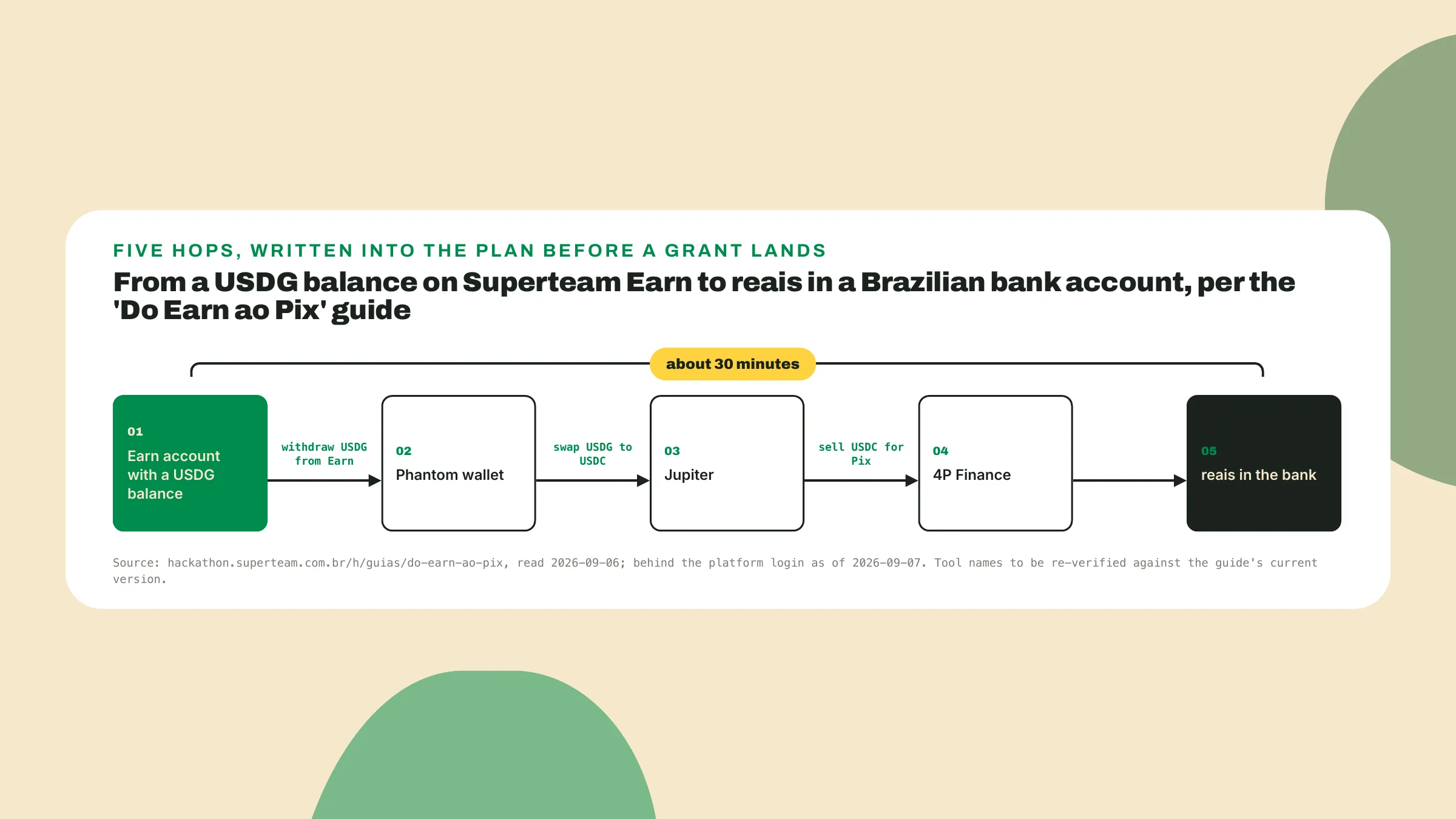
Los USDG en Earn son un número en una pantalla hasta que llegan a una cuenta desde la que puedes pagar el alquiler. La guía de Superteam Brasil 'Do Earn ao Pix', en hackathon.superteam.com.br/h/guias/do-earn-ao-pix, está detrás del login de la plataforma al 2026-09-07, así que inicia sesión para leerla. Leído el 2026-09-06, el riel es así: una cuenta de Earn y una billetera Phantom, retirar los USDG de Earn a Phantom, cambiar USDG por USDC en Jupiter, vender los USDC por Pix en 4P Finance, unos 30 minutos en total.
Primero verifica los nombres de las herramientas contra la versión actual de la guía, porque el lugar del swap y el off-ramp cambian entre temporadas. Para un equipo fuera de Brasil la forma es la misma con otros nombres: el listado de tu Superteam regional en Earn, una billetera, un swap y un off-ramp que tu país permita.
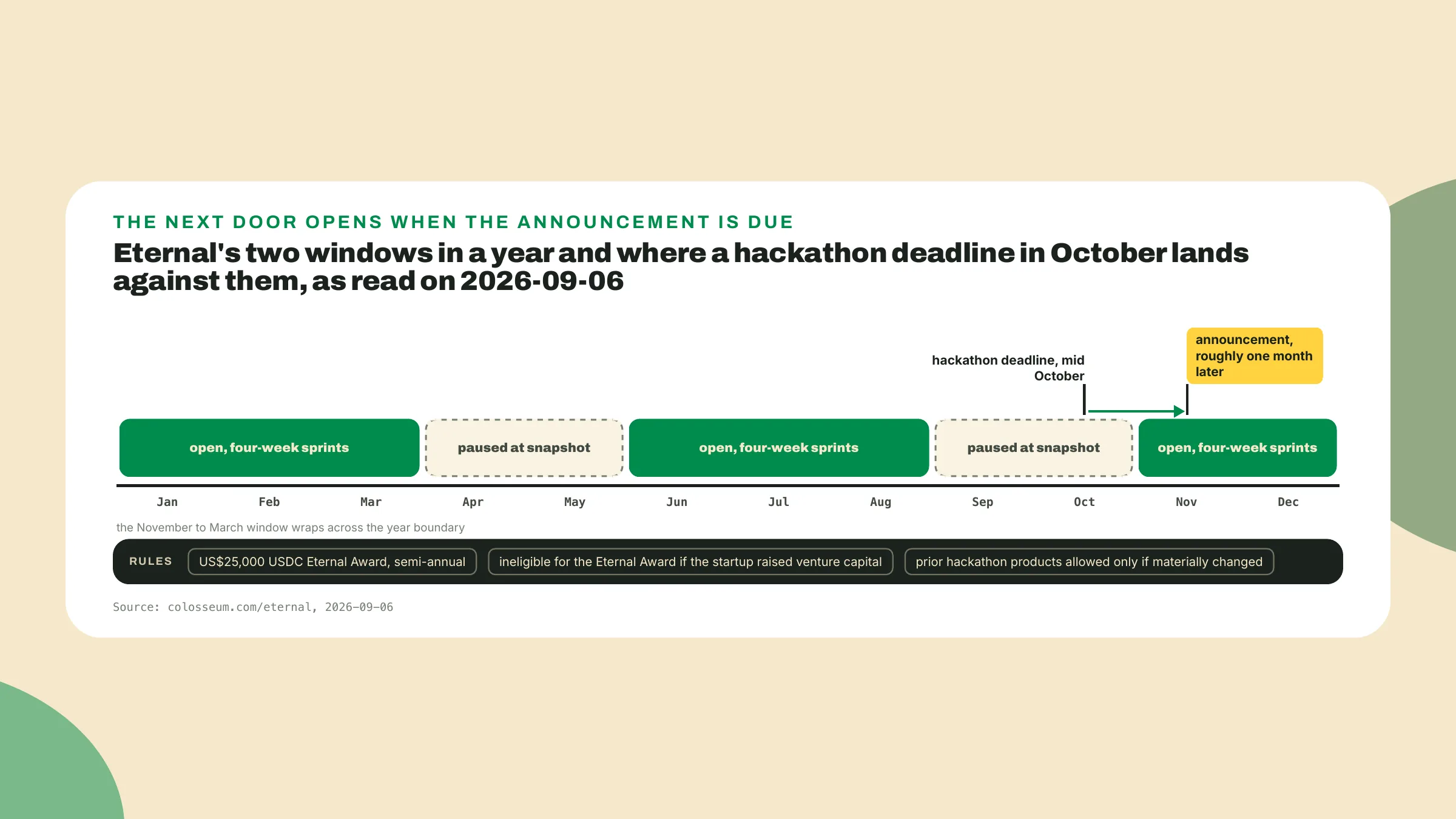
Copia la regla de Eternal exactamente como la imprime la página. Eternal, según colosseum.com/eternal el 2026-09-06, es un conjunto de sprints de cuatro semanas que uno mismo inicia, dentro de dos ventanas al año, de noviembre a marzo y de junio a agosto, y que queda pausado en un snapshot fuera de ellas, con un Eternal Award de US$25,000 USDC que se paga cada seis meses. Dos reglas deciden qué puede sacar tu proyecto de ahí. Una startup que levantó capital de riesgo no es elegible para el Eternal Award, aunque sí puede entrar a un sprint, que sigue abierto a desarrolladores y fundadores cripto siempre que Eternal esté abierto. Y los productos de hackathons anteriores se permiten solo si cambiaron materialmente.
Cambiar materialmente quiere decir que el producto que entra es distinto del que enviaste de una manera que un revisor puede ver, y la página no imprime ningún umbral. El mismo repo con un README nuevo no califica. La misma idea con el fiado liquidando ya para tiendas reales y un recordatorio reescrito probablemente sí, y yo no apostaría un sprint de cuatro semanas a la palabra probablemente, así que anota qué cambió antes de que empiece el sprint. Una fecha límite en octubre pone el anuncio cerca de noviembre, y en noviembre abre la ventana.
Decide adónde va un pitch perdido, puerta por puerta. Si el pitch fue peor que el producto, sigue trabajando en la idea y preséntala en el próximo hackathon cuyas reglas lo permitan. Unruggable compitió en cuatro hackathons de Colosseum y ganó el gran premio en el cuarto, y Colosseum lo imprime en la tarjeta de la empresa en colosseum.com/hackathon, leída el 2026-09-08. Cloak (x.com/cloak_ag) quedó tercero en un track y después tomó un pre-seed de Colosseum de US$250,000, al 2026-09-06. Bido (x.com/usebido) pasó de dos amigos en la mentoría de Superteam Brasil a una ronda en Silicon Valley sin cifra pública.
La próxima temporada global de Colosseum es el camino simple, y la lista de verificación que firmaste en la lección pasada vuelve a mandar: un producto por persona, el líder completa el envío, código previo declarado. El recorte de la temporada pasada es código previo en esta temporada, así que decláralo y muestra el trabajo hecho dentro de la ventana nueva.
El párrafo de Fiado: si no queda, Eternal en la ventana de noviembre, con el flujo de liquidación movido de devnet a una tienda real, el recordatorio reescrito alrededor de lo que pidió la dueña de la tienda, los primeros veinte segundos del pitch cambiados porque la ronda de feedback cuatro dijo que la historia de la libreta tardaba demasiado en llegar, y la próxima temporada global con el reenvío y el código previo declarado.
next-season-plan.md, Fiado, abierto 2026-09-06

después de enviar:  entrevista de 15 minutos por Zoom para 'an even smaller group of teams' (un grupo aún más pequeño de equipos);
                    ganadores y el subconjunto de la aceleradora anunciados más o menos un mes después de
                    la fecha límite (colosseum.com/hackathon, 2026-09-06)
prep de entrevista: founder y market fit: la dueña de la tienda detrás de la caja, con nombre
                    cómo se encontró la oportunidad: cinco conversaciones, semana 1, paquete de evidencias
                    cómo prioriza el equipo: no-objetivos de la tarjeta de alcance, el corte de la semana 3 y su razón
                    en la llamada: storyteller y builder
aceleradora:        entrevista garantizada para ganadores, no admisión; no es obligatorio entrar;
                    US$250,000 por startup aceptada a lo largo de ocho semanas
                    (colosseum.com/accelerator, 2026-09-06)
financiamiento:     grant convertible, Solana Foundation (bien público con un componente comercial);
                    guías: Public Good, Open Source, Only Possible on Solana, Clear Use of Funds;
                    revisión cerca de una semana, decisión cerca de tres semanas (solana.org/grants, 2026-09-06)
earn:               Solana Foundation Brazil Grants, de 0 a US$10,000 USDG,
                    superteam.fun/earn/grants/solana-foundation-brazil-grants (2026-09-06);
                    riel: Earn -> Phantom -> USDG a USDC en Jupiter -> Pix en 4P Finance, unos 30 min
                    (hackathon.superteam.com.br/h/guias/do-earn-ao-pix, 2026-09-06; detrás del login de la plataforma al 2026-09-07)
entre temporadas:   Eternal, ventana de noviembre a marzo, un sprint de cuatro semanas; cambio material:
                    una tienda real liquidando en el fiado, recordatorio reescrito; sin VC levantado (la condición del Award)
                    (colosseum.com/eternal, 2026-09-06)
próxima temporada:  la temporada después de World's Fair no tenía página el 2026-09-06; releer
                    colosseum.com/hackathon cada mes y escribir aquí la fecha cuando la imprima
tracción:           de 4 tiendas con fiados reales a uso recurrente, tiendas llevando el fiado cada semana
                    durante un mes (traction-log.md); crecer por el canal que el registro respaldó,
                    conversaciones en persona en la reunión de la cooperativa; mantener al día la línea del burn rate; redoblar lo que
                    trajo a las tiendas que volvieron
cambio de pitch:    los primeros veinte segundos; la historia de la libreta llega en el segundo diez (ronda de feedback 4)
Cierra el plan. Este es el mapa conceptual del curso, completo, con los entregables que construiste lección por lección. Cada archivo está en un solo repo, con fecha, citando la página de donde salió, y por eso la segunda temporada cuesta una fracción de la primera: la página de la temporada se vuelve a consultar, el pitch se reescribe y el resto se queda.
cuatro preguntas debajo de todo conjunto de criterios de evaluación:  ¿es un problema real? / ¿funciona? / ¿la historia convence? / ¿es este equipo?
Colosseum agrega dos:               Viability, Traction
reglas de la casa:                  correr antes de nombrar / pitch desde el día 0 / revisar cada entregable contra la página

entregables: 1 el registro, leído             9 recorte en devnet, una transacción real
             2 brief de Colosseum             10 bitácora narrativa + pitch v2
             3 tarjeta del equipo + plan      11 one-pager de GTM + lista de socios
               del mes + pitch v0             12 deck + pitch final
             4 memorando de la idea           13 video de presentación + video de demo
             5 mapa de competidores +         14 material de entrega
               dimensionamiento               15 plan de la próxima temporada
             6 paquete de evidencias + memorando
               de decisión + pitch v1 + registro de feedback
             7 brief rederivado para una temporada no vista
             8 tarjeta de alcance + guion de demo

hilo del pitch:  v0 (entregable 3) -> v1 (entregable 6) -> v2 (entregable 10) -> final (entregable 12), cuatro rondas de feedback
se lleva:        todo el repo    se vuelve a consultar: la página de la temporada    se reescribe: el pitch
Un proyecto enviado tiene cinco lugares adonde ir, y el plan los nombra antes de que lleguen los resultados: la entrevista, la aceleradora (una entrevista para los ganadores, no la admisión), los grants de la Foundation, Superteam Earn y Eternal entre temporadas, cada uno con su propia regla sobre un producto de un hackathon anterior. Un pitch perdido es un archivo con fecha y una línea sobre qué cambia. Las dos cosas que deciden la mayoría de los resultados son el video que abren primero y un producto por persona, y todo lo demás del curso es cómo hacer que esas dos salgan bien.
No hay próxima lección central. Sigue una lección opcional, sobre cómo usar un hackathon de temporada de Superteam Brasil o un side track de Earn antes de la temporada como ensayo para ella, y su primera acción es leer la página de una edición en quince minutos. Tómala si tienes un ensayo en el calendario. Sáltatela si la próxima temporada global está más cerca que la próxima local.
El pitch que la última vez fue peor que el producto ahora es un archivo con fecha y una línea sobre qué cambia. El curso termina aquí, y la próxima temporada abre en la página que ese archivo te diga que releas.
Inscríbete para hacer el quiz
El quiz es parte del curso: inscríbete para responderlo, seguir tu progreso y ganar XP.