Carregando...

 BetaBeta
Na última lição você rodou o teste que podia ter matado a ideia, registrou a decisão por escrito no memorando de decisão e reescreveu o pitch como v1 em cima do pacote de evidências. Deixe o pacote de evidências aberto, ele vai receber nota de novo antes do fim.
Aqui está uma temporada da Colosseum que já acabou, em páginas que você nunca leu. Daqui a trinta minutos você vai saber o que era vencer ali, o que mudou daquela temporada para a do seu primeiro brief, o que não mudou, e se o seu pacote de evidências teria pontuado. É para instalar essa habilidade que este curso existe.
Leitura a frio é reconstruir o brief a partir de uma página que você nunca viu, sem copiar nada de um brief que você já tem. Repontuar é dar nota de novo ao pacote de evidências, agora contra os critérios de julgamento que você acabou de reconstruir, para ver se o número se mexe. O cronômetro está ali porque ler uma página de temporada sem cronômetro leva uma semana, espalhada em discussões e releituras.
Ligue o cronômetro agora, abra colosseum.com/frontier e crie colosseum-brief-2.md ao lado do primeiro brief.
colosseum-brief-2.md, Frontier, lido a frio em <data de hoje>
datas da temporada:
prêmios:
jurados:
fatores:         (citados da página, com data)
um problema real:
funciona:
a história convence:
este time:
a Colosseum acrescenta:  Viability (viabilidade) / Traction (tração)
os jurados abrem:
prazo local:
desclassifica:
mudou desde:     (três linhas no mínimo)
não mudou:       (três linhas no mínimo)
repontuação:     (0 a 10 por pergunta, uma frase cada)
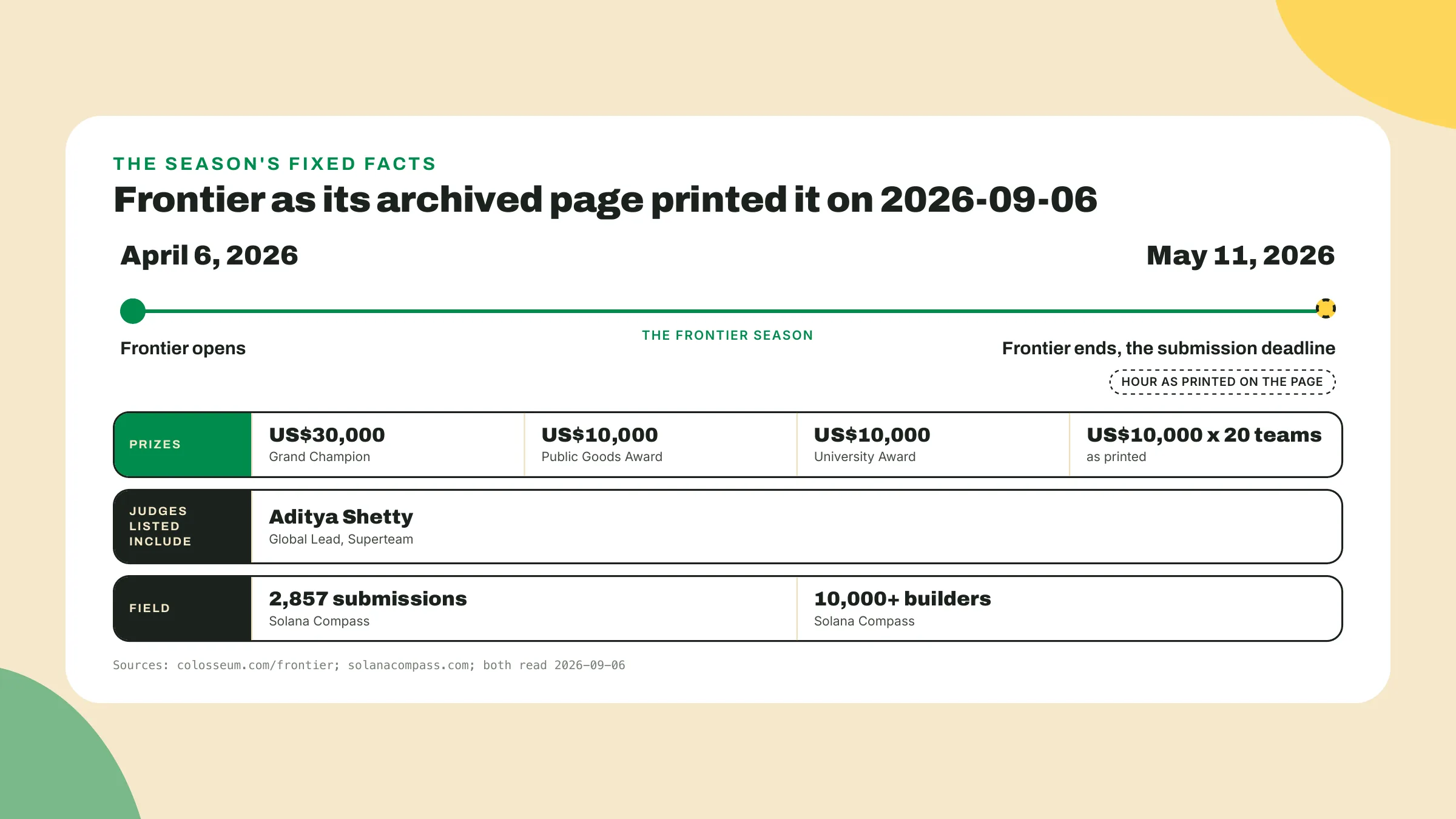
Comece pelas linhas que mudam: datas, prêmios, jurados e número de concorrentes, cada uma com a URL e a data da leitura na mesma linha. A Frontier rodou de 6 de abril a 11 de maio de 2026. A lista de prêmios em colosseum.com/frontier, lida em 2026-09-06, mostra um Grand Champion de US$30,000, um Public Goods Award de US$10,000, um University Award de US$10,000 e US$10,000 para cada um de vinte times. Entre os jurados listados está Aditya Shetty, Global Lead na Superteam. O Solana Compass, lido no mesmo dia, conta 2,857 submissões e 10,000+ builders.
Vinte times a US$10,000 quer dizer que um projeto que não ganhou nada ainda tinha vinte e três colocações premiadas acima dele, contando os três prêmios com nome, e é com esse número que um time de dois planeja, não com os US$30,000. 2,857 é o tamanho da disputa em que o seu projeto era uma linha. Um jurado da Superteam diz quem leu aquela temporada e nada sobre quem lê a próxima, então a linha dos jurados vai para a coluna do que mudou antes mesmo de você abrir uma segunda temporada.
Copie os critérios de julgamento da página, nunca de memória. Ache a seção de julgamento na página arquivada, ou em colosseum.com/hackathon quando a página da temporada aponta para lá, e cole o que está impresso, com a URL e a data na mesma linha. Lida em 2026-09-06, é a lista do bloco abaixo, os sete fatores: Founder + Market Fit (encaixe entre fundador e mercado), Insight (a sacada), Product + Execution (produto e execução), Potential Market Size (tamanho potencial do mercado), Founder Communication (comunicação dos fundadores), Viability e Traction. Se a página que você abrir imprimir outra coisa, a página vence e a diferença vai para a coluna do que mudou.
Depois mapeie as quatro perguntas para os fatores e acrescente a linha "os jurados abrem", dizendo de qual página ela veio. Se a página da temporada não fala disso, a linha fica "não consta na página da temporada, tirado de colosseum.com/hackathon" e leva as duas datas. A primeira metade do Fiado:
colosseum-brief-2.md, Fiado, Frontier, lido a frio em 2026-09-06

datas da temporada:  6 de abril a 11 de maio de 2026 (colosseum.com/frontier, 2026-09-06)
prêmios:             US$30,000 Grand Champion; US$10,000 Public Goods Award;
                     US$10,000 University Award; US$10,000 x 20 times (mesma página, mesma data)
jurados:             incluem Aditya Shetty (Global Lead, Superteam)
fatores:             Founder + Market Fit; Insight; Product + Execution; Potential Market Size;
                     Founder Communication; Viability; Traction (colosseum.com/hackathon, 2026-09-06)
um problema real:    Insight, Founder + Market Fit, Potential Market Size
funciona:            Product + Execution (o recorte na devnet, ainda não construído na semana 1)
a história convence: Founder Communication, nas respostas escritas, no vídeo, na entrevista
este time:           Founder + Market Fit, a revisão do repositório
a Colosseum acrescenta: Viability (quem paga pelo fiado); Traction (cinco mercadinhos com fiado de verdade antes do prazo)
os jurados abrem:    o vídeo de apresentação primeiro, depois a revisão do repositório, depois a entrevista
                     de 15 minutos para um grupo menor (colosseum.com/hackathon, 2026-09-06)
prazo local:
desclassifica:
mudou desde:
não mudou:
repontuação:
prazo local:     11 de maio de 2026, hora como impressa em colosseum.com/frontier (lida em <data>),
                 convertida: <hora local, offset>   ou   "hora não impressa"
desclassifica:   <linha 1, citada, com data>
                 <linha 2, citada, com data>
                 <linha 3, citada, com data>
lido em:         <minutos no cronômetro>
Pare o cronômetro e escreva os minutos no topo do arquivo. Um quarenta honesto vale mais do que um trinta arredondado, e eu chuto que o primeiro número honesto fica mais perto de quarenta, e abaixo de vinte na terceira temporada. O número da próxima temporada vai embaixo dele, e a diferença entre os dois é a única nota que esta lição guarda.
Abra a segunda temporada arquivada e escreva a nota do que mudou e do que não mudou. Os resultados da Cypherpunk estão em blog.colosseum.com, trilhas e vencedores numa página só. Lida em 2026-09-07: as submissões venciam em 30 de outubro de 2025 e os vencedores saíram em 13 de dezembro de 2025, e a data de dezembro é do anúncio, não da temporada. Foram 9,000+ participantes e 1,576 projetos finais em seis trilhas: Infrastructure, Consumer, DeFi, Stablecoins, RWAs e Undefined. O Grand Champion levou US$30,000 USDC, cada primeiro lugar de trilha levou US$25,000, o University Award foi para a Pythia com US$10,000 e o Public Good award para a Samui Wallet com US$10,000.
Reserve cinco dos trinta minutos para o side track, a trilha regional. O endpoint da Superteam Earn para a temporada, superteam.fun/api/hackathon/cypherpunk, lido em 2026-09-07, ainda retorna 41 side tracks somando US$341,750, e a página em earn.superteam.fun/hackathon/cypherpunk é montada a partir dele, então quando a página mostrar placeholders, leia o endpoint. O índice em earn.superteam.fun/hackathon/all se apresenta como o lugar para submeter aos side tracks do Solana Global Hackathon mais recente, com um FAQ explicando a diferença entre um side track e uma trilha principal da Colosseum.
O Cointelegraph Brasil publicou os números da Superteam Brasil naquela temporada: 299 participantes inscritos, 52 projetos submetidos, 7 classificados e 2 premiados. Contra 1,576 projetos finais no mundo, 52 é uma disputa pequena, uma linha com data no brief e não um conjunto próprio de critérios de julgamento.
Agora separe o que mudou do que não mudou, três linhas de cada lado, em relação à temporada do seu primeiro brief (a World's Fair de 2026, em 2026-09-06). A nota do Fiado:
mudou desde:     datas: submissões até 30 de outubro de 2025 (Cypherpunk) contra
                 6 de abril a 11 de maio de 2026 (Frontier)
                 formato dos prêmios: seis primeiros de trilha a US$25,000 contra vinte times a US$10,000
                 trilhas: seis nomeadas na Cypherpunk, as da Frontier copiadas da página dela, não presumidas
                 jurados: uma lista de nomes é uma lista de uma temporada só
                 concorrentes: 1,576 projetos finais contra 2,857 submissões, contados de jeitos
                 diferentes, os dois guardados com a fonte
não mudou:       os sete fatores de julgamento (colosseum.com/hackathon, 2026-09-06)
                 a lista de campos do portal (mesma página, mesma data)
                 a etapa da entrevista de 15 minutos (mesma página, mesma data)
Repontue o pacote de evidências contra os sete fatores. Dê 0 a 10 em cada uma das quatro perguntas, uma frase cada, depois uma linha para Viability e uma para Traction, depois três linhas sobre o que mudaria para o seu projeto. Se uma linha diz que nada muda, diga por quê.
Os números do Fiado na semana 1: um problema real 7 (cinco conversas com data, com donos que mantêm caderneta), funciona 3 (nenhum recorte na devnet ainda, nota dada sobre o plano), a história convence 5 (pitch v1 reescrito a partir de evidência, uma rodada de feedback com três pessoas), este time 6 (um fundador que já ficou atrás do balcão, trabalho no repositório ainda por vir), Viability como o memorando respondeu, Traction perto de zero até os primeiros design partners (os clientes parceiros) terem fiado de verdade rodando na semana 3.
As três linhas do Fiado: nada nas quatro perguntas se mexe, porque os fatores são os mesmos e a evidência é a evidência. O formato dos prêmios muda a cara de um bom resultado: vinte times a US$10,000 quer dizer que o plano mira uma colocação premiada antes de mirar o campeão. A linha dos jurados nomeia uma pessoa de uma temporada só, então o pitch não é escrito para um nome.
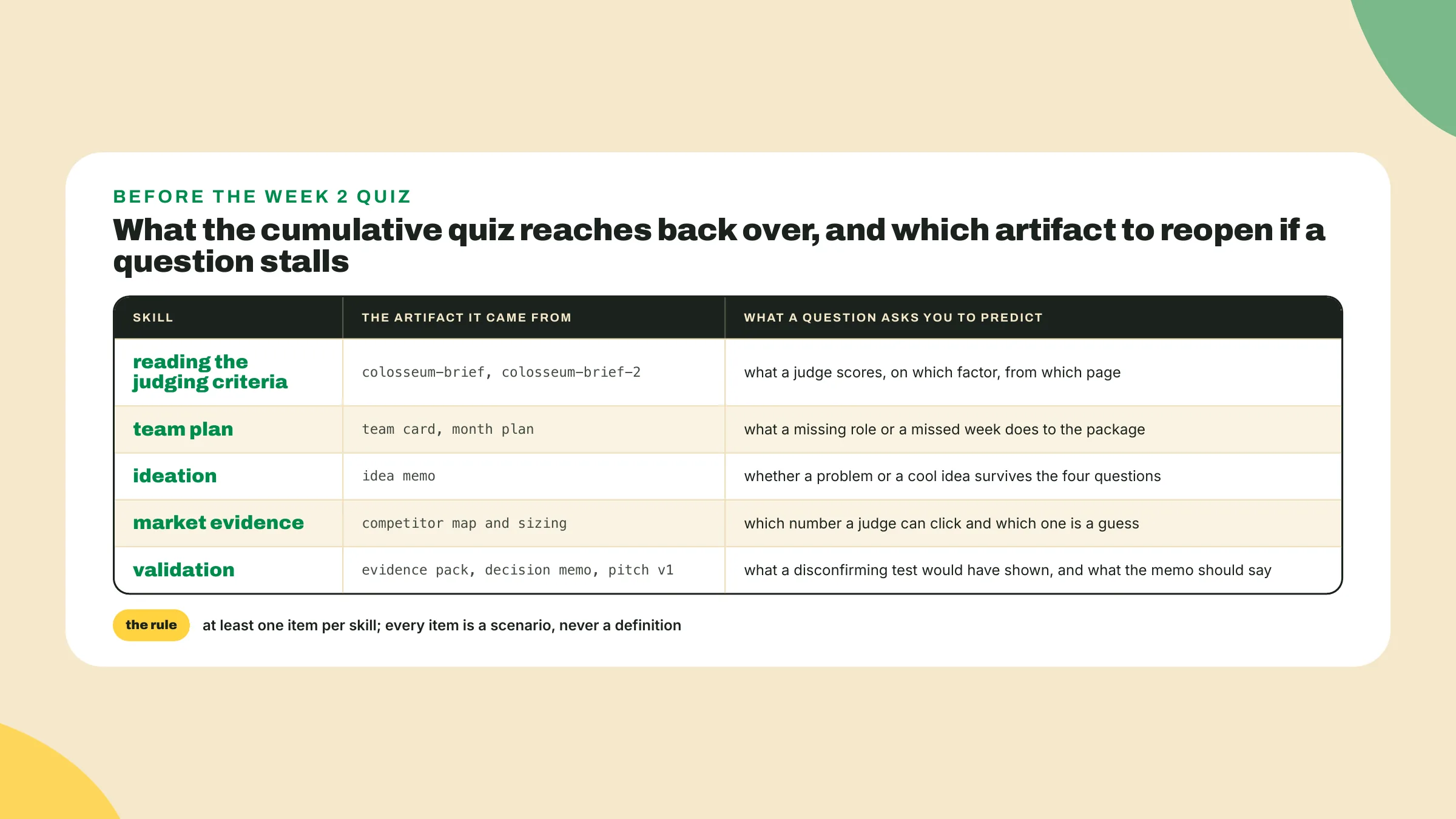
Faça o quiz cumulativo no fim desta lição. Ele revisita cinco habilidades, pelo menos uma pergunta por habilidade, e cada item é um cenário em que você prevê o que um jurado ou um portal faz, nunca uma definição. Se uma pergunta cair em algo que você precisa consultar, esse é o artefato para reabrir antes da semana 2.
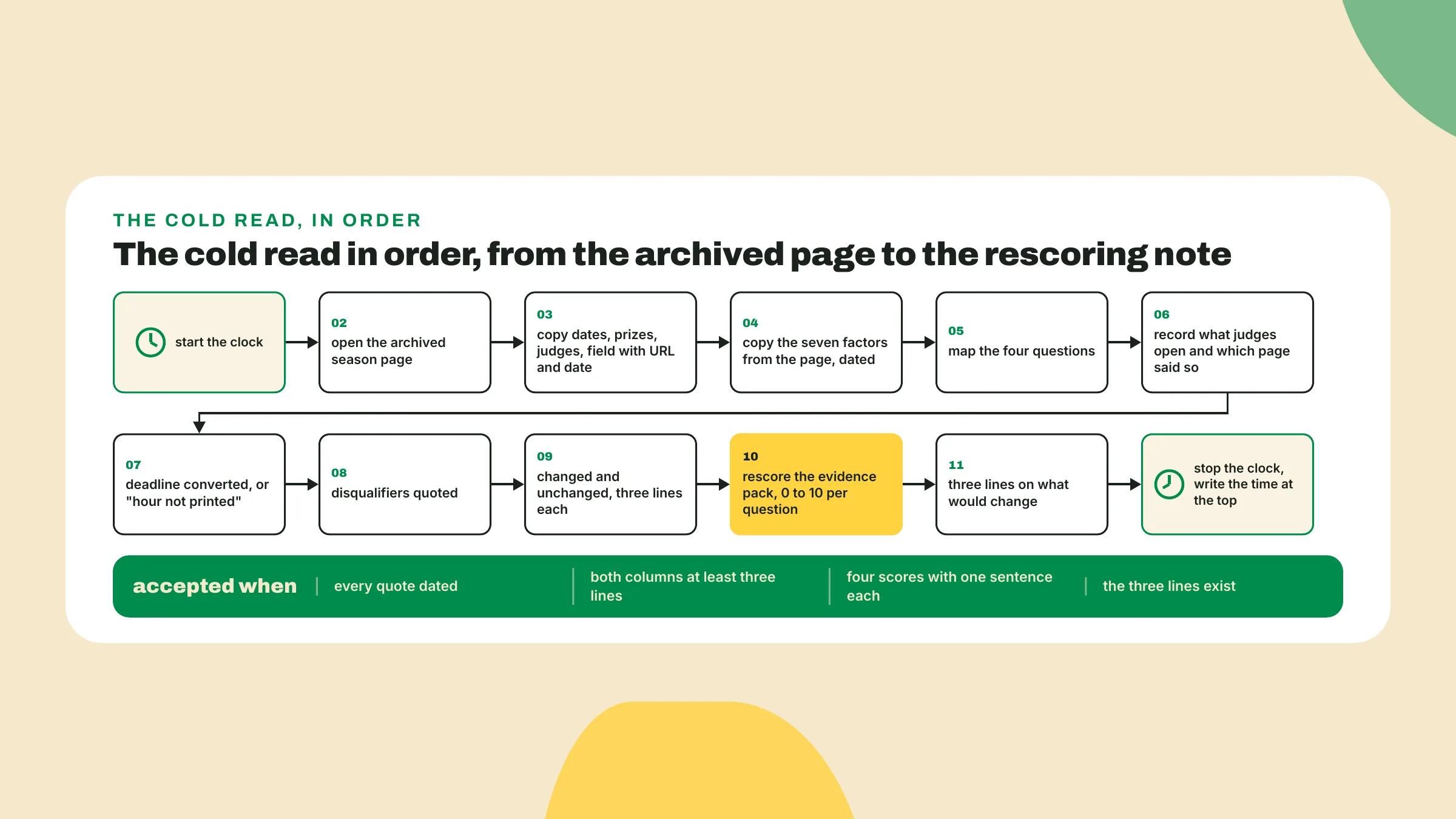
O exercício inteiro em ordem, para você conferir o seu arquivo:
Esta lição não produz nada que entre no material de submissão. O cartão de escopo da próxima lição lê o mesmo pacote de evidências e o mesmo pitch v1, e o valor dela é pago na próxima temporada, quando a página levar vinte minutos em vez de uma semana perdida.
Datas, prêmios e jurados mudam toda temporada. Os sete fatores, a lista de campos do portal e a etapa da entrevista se mantiveram por Frontier, Cypherpunk e a temporada da World's Fair. A coluna do que não mudou é a base deste curso, e a coluna do que mudou é o que você copia de novo da página a cada vez. Se na próxima temporada a página levar vinte minutos em vez de uma semana perdida, esta lição fez o trabalho dela.
As semanas 2 e 3 começam na próxima lição, e a primeira coisa que você escreve não é código. É o roteiro da demo de três minutos, o que está na tela em cada marca e a única transação real, e é ele que decide o que você constrói. Você reconstruiu um brief a partir de uma página que nunca tinha visto. Na próxima temporada isso vai custar um café, e as três linhas da sua coluna do que não mudou ainda vão estar lá quando você abrir.
Inscreva-se para fazer o quiz
O quiz faz parte do curso — inscreva-se para respondê-lo, acompanhar seu progresso e ganhar XP.